

Events
Democracy Events

Brazil at a Crossroads: Discussing the 2026 Elections
October 13, 2026 | 3:00-4:30PM | Haven Hall, 5769 Pre-function Room
On October 4, 2026, Brazil, Latin America’s largest democracy, will hold presidential elections. Voters will also elect members of the National Congress, governors and vice governors, and more than 1,000 state legislators.
More about this event
The elections come at a consequential moment for Brazil, amid concerns about corruption and inflation, disputes over tariffs and trade, and growing tensions with the Trump administration.
The Latin American Elections Hub (LATAM-EH) brings together a group of experts to discuss the stakes of the election for Brazil and its broader regional and international implications. The panel will analyze the results of the first round, the factors shaping voter behavior, and the prospects for a potential second round on October 25, 2026.
The panelists will be Cesar Zucco (Columbia University), Raphael Nishimura (University of Michigan, ISR), and Malu Gatto (University College London). The event chair is Pedro Luz de Castro of the University of Michigan. Edgar Franco-Vivanco, Director of the Latin American Elections Hub, is the discussant.
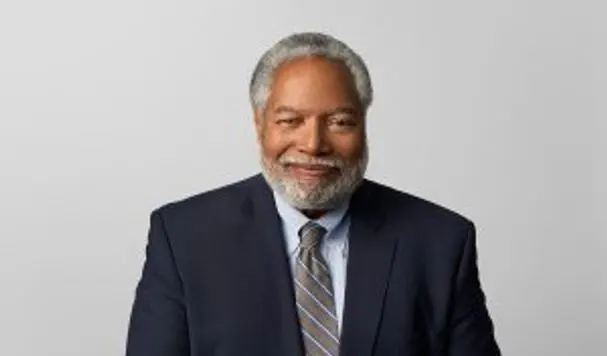
America at 250: History, Memory, and Truth
October 28, 2026 | 6:00pm–8:00PM | Rackham Graduate School Auditorium
Museums are the classrooms of our country. They play a crucial role in helping us understand the nation’s complex past. Join us for a dynamic conversation with Lonnie G. Bunch III, Secretary of the Smithsonian Institution and Lynette Clemetson, Director of Wallace House Center for Journalists, as they reflect on the significance of the 250th anniversary of the United States.
More about this event
At a moment in which discussions about our shared past and collective future feel especially urgent, this event offers an opportunity to learn from a leader who has devoted his career to informing and inspiring Americans to strive for the public good.
Rescheduled from the original March, 2026 date!
Free and open to the public. Registration is not required but we would appreciate it if you let us know you're coming at https://myumi.ch/bDEz9.
Q & A will follow and copies of Secretary Bunch's book A Fool's Errand: Creating the National Museum of African American History and Culture in the Age of Bush, Obama, and Trump will be available for purchase.
Parking is available at the Thayer Parking Structure, 216 S. Thayer, at the standard charge of $10/vehicle.
Lonnie G. Bunch III is the 14th Secretary of the Smithsonian. He assumed his position June 16, 2019. As Secretary, he oversees 21 museums, 21 libraries, the National Zoo, numerous research centers, and several education units and centers. Two new museums—the National Museum of the American Latino and the Smithsonian American Women’s History Museum—are in development. Bunch was the founding director of the Smithsonian’s National Museum of African American History and Culture. Bunch chronicled the creation of the museum in his book, A Fool’s Errand: Creating the National Museum of African American History and Culture in the Age of Bush, Obama, and Trump, and is the first historian to be Secretary of the Institution. Since 2024, Bunch has been Honorary Professor of Practice at Queen’s University Belfast. A member of the American Academy of Arts & Sciences, Bunch received France’s highest award, The Legion of Honor, in 2021.
Lynette Clemetson is Director of Wallace House Center for Journalists, home of the Knight-Wallace Fellowships for Journalists and the Livingston Awards for Young Journalists at the University of Michigan. She came to the university from NPR where she was Senior Director of Strategy and Content Initiatives, developing and guiding projects across broadcast, digital and events to develop new audiences. Her career in journalism spans newspapers, magazines and audio across a range of platforms. As a reporter, she was a Washington-based correspondent for The New York Times and Newsweek, writing about politics, social issues and demographic change. Prior to her domestic correspondent work, she was an international correspondent for Newsweek based in Hong Kong, where she covered the former British colony’s return to Chinese rule in 1997. She moved into digital strategy and leadership in 2008 as the founding managing editor of TheRoot.com, launched for The Washington Post Company with Henry Louis Gates Jr. She is also the former Director of Content Strategy at Pew Center on the States.
This 2026 Marc and Constance Jacobson Lecture is presented by the Institute for the Humanities in partnership with Wallace House Center for Journalists. Additional support provided by the Initiative for Democracy & Civic Empowerment, Life-Changing Education, Museum Studies Program, U-M Library, and the U-M Museum of Art.
Amplify your event
Interested in partnering with us? Reach out to promote or co-brand your event!
Events around campus
-
Who Counts? A History of Voting in America Exhibit
Sep 11 – Dec 22, 2026 | William L Clements Library, 909 S. University Ave., Ann Arbor, MI 48109
The word “vote” appears in the United States Constitution thirty-six times. But it was not until the ratification of Fourteenth Amendment, in 1868, that it is used in the most familiar sense, referring to an average citizen choosing their representatives. All of its earlier uses either refer to the functioning of the House and Senate or the process by which the Electors select the President and Vice-President.
More about this event
The nation’s supreme law was largely silent on who would be allowed to vote in the new nation, as well as on who would count those votes. Article 2, Section 1 states that “each state shall appoint [Electors], in such manner as the Legislature thereof may direct,” but it offers no guidance on how the members of those state legislatures would be elected. The result was significant diversity in who got to vote and how they voted.
Changes over the course of the nineteenth century in how Americans voted, from voice vote to public ballot box to private voting booth, also saw changes in the material culture that surrounded voting. Ballots and ballot boxes, campaign pins and ribbons, blank lists and pre-printed party tickets, lanterns and banners–the creative forces of the American print industry filled the country’s cities and small towns with the ephemera of electioneering.
As you look at the items in this exhibit, think about what they tell us about how Americans in the past felt about voting, and about how voting felt. How did Election Days feel when they were full of parades and music and public drinking? What was it like to vote when everyone around you knew who you voted for? And, most of all, who counted as a voter, and who did the counting?
-
Political Speech and the Public Square
October 8, 2026 | 12:00-1:00PM | The Diag, 913 S University Ave, Ann Arbor, MI 48109
In Fall 2024, the Faculty Senate Office launched this series – Political Speech and the Public Square – to provide a forum for members of the U-M community to present informed, fact-based perspectives, and to listen to and learn from each other.
More about this event
In his essay, “Education as a Space to Change Your Mind,” philosopher Troy Jollimore reminds us of Socrates’ commitment to open-mindedness: “It requires that we work toward developing a sense of the world as a vast and complex place that we can, and ought to, continue to learn about for the rest of our lives.”
Offered in this spirit of intellectual humility, to support the principles of academic freedom, and to develop a campus climate comfortable with hearing different well-informed points of view, even those counter to one’s own views, the lunchtime series will take place on the Diag throughout the Fall. U-M Students, staff, and faculty can sign up in advance to request an opportunity to speak on select topics for 3-5 minutes. Or they can simply come to listen and learn. These events are co-sponsored by the Faculty Senate Office, the Center for Democracy & Civic Empowerment, the Ginsberg Center, Open Inquiry: Talking Maize & Blue, and Central Student Government.
-
"Rebuilding Democracy" Osita Nwanevu in conversation with Elizabeth Anderson on the American Crossroads
October 9, 2026 | 6:00PM | Ross School of Business, Robertson Auditorium
As the country heads into the 2026 midterm elections, the University of Michigan welcomes journalist Osita Nwanevu, contributing editor at The New Republic and columnist at The Guardian, for a public conversation with Elizabeth Anderson, the John Dewey Distinguished University Professor of Philosophy.
More about this event
The evening centers on Nwanevu's new book, The Right of the People: Democracy and the Case for a New American Founding, which argues that America's democratic troubles run deeper than any single election. The real problem, Nwanevu contends, lies in institutions that were never designed to let majorities govern, and in an economy that keeps power far from ordinary people.
Anderson, one of the country's most influential political philosophers, brings her own work on democracy, equality, and the workplace to the exchange. Together they take up the questions this election season keeps surfacing. Who really holds power in America? Why do so many people feel unheard, and what would it take to build a democracy worthy of the name?
The conversation is free and open to students, faculty, and the broader Ann Arbor community, with time for audience questions.
Schedule
Graduate student workshop with Osita
Central Campus, room sent to registrants.
2:00 to 3:30 pm
Sign up:RVSP Form
Main Event
Friday, October 9, 2026
Ross School of Business, Robertson Auditorium
5:30 pm Doors open, light refreshments and Literati book sales in the lobby.
6:00 pm The program begins, including questions and answers at the end.
7:30 pm Refreshments and book signing / sales in the lobby until 8:00 pm.
RSVP -- free, but please sign up to help us plan refreshments:RVSP Form
Sponsors and Partners
U-M Department of Philosophy; Energy Club at Ross; Rackham Graduate School; Poverty Solutions; Business+Impact at Ross; Wallace House; Institute for the Humanities; U-M Department of History; Eisenberg Institute for Historical Studies; U-M Department of English Language & Literature; Ford School of Public Policy; Center for Positive Organizations; Center for Political Studies; U-M Department of Political Science; Michigan Law; the Philosophy, Politics, and Economics Program; Science, Technology & Society; Science, Technology & Public Policy at the Ford School; the Erb Institute; Net Impact; U-M Department of Sociology, and Department of Afroamerican and African Studies. -
Political Speech and the Public Square
October 29, 2026 | 12:00-1:00PM | The Diag, 913 S University Ave, Ann Arbor, MI 48109
In Fall 2024, the Faculty Senate Office launched this series – Political Speech and the Public Square – to provide a forum for members of the U-M community to present informed, fact-based perspectives, and to listen to and learn from each other.
More about this event
In his essay, “Education as a Space to Change Your Mind,” philosopher Troy Jollimore reminds us of Socrates’ commitment to open-mindedness: “It requires that we work toward developing a sense of the world as a vast and complex place that we can, and ought to, continue to learn about for the rest of our lives.”
Offered in this spirit of intellectual humility, to support the principles of academic freedom, and to develop a campus climate comfortable with hearing different well-informed points of view, even those counter to one’s own views, the lunchtime series will take place on the Diag throughout the Fall. U-M Students, staff, and faculty can sign up in advance to request an opportunity to speak on select topics for 3-5 minutes. Or they can simply come to listen and learn. These events are co-sponsored by the Faculty Senate Office, the Center for Democracy & Civic Empowerment, the Ginsberg Center, Open Inquiry: Talking Maize & Blue, and Central Student Government.