Can AI Help Reduce Political Polarization?
November 20, 2025 | Nicole Frawley-PanyardRethinking What Misinformation Is Really About
In a moment when misinformation seems impossible to contain and political divides feel sharper than ever, most strategies aimed at addressing the problem still rely on a familiar playbook: correct the facts, show the evidence, and provide the authoritative link. It assumes that if people have the “right” information, they will use it.
But what if that assumption is flawed?
That’s the starting point for new research led by Cesi Cruz, Associate Professor of Public Policy and Political Science at the University of Michigan. Her work suggests that the spread of misinformation is less about lack of knowledge and far more about identity, emotion, and belonging.
Think of it like a sports fan watching a referee call against their team. Even when the call is objectively correct, the reaction is visceral. The anger isn’t about the rule. It’s about loyalty.
According to Cruz, most misinformation works the same way.
“When we talk about misinformation, we often imagine that people simply don’t have the replay,” Cruz explained. “But even if you show someone clear evidence, they often don’t change their mind. That’s not because they don’t understand the information. It’s because the belief is connected to who they are, the groups they identify with, and the emotions they’re feeling in the moment.”
Not Fact-Checking, But Reflection
With support from U-M’s Year of Democracy initiative, Cruz’s team is developing a new kind of AI-enabled chatbot that doesn’t correct misinformation at all. Instead, it prompts people to reflect:
- “What about this message feels true to you?”
- “How does your identity shape your reaction to this idea?”
- “If this situation were reversed, how would you want the other side to respond?”
The goal is not to win an argument. It’s to gently widen the user’s sense of community and shared experience.
And the early results are striking.
In a series of in-person pilot workshops in the Philippines led jointly by Cruz and her coauthor Julien Labonne of Oxford University, this approach didn’t necessarily improve participants' ability to identify factual accuracy. But it did something arguably more important. It changed how people evaluate and share information. Participants reported:
- Less reliance on social media for news
- Greater caution before sharing information
- Reduced perception of polarization
- Change in voting patterns and reduced responsiveness to online campaigning
Those gains lasted beyond the workshops, extending to friends and neighbors who did not attend the sessions but showed similar shifts in behavior. Because people changed how they receive news, not just whether they can identify a single false claim, this broader community-level shift may be more effective at building resilience to misinformation than correcting individual posts one by one.
Why Use AI
One challenge of running these reflection-based workshops is that they require trained facilitators and significant time. AI changes that.
But scale is only part of the story. Cruz argues that AI can make conversations easier because chatbots don’t judge.
“People ask AI questions they would never ask a colleague or even a friend,” she said. “There’s no embarrassment. No fear of looking uninformed or disloyal to your group.”
This nonjudgmental space allows users to explore doubt and complexity, which are the very conditions under which identity loosens its grip on belief.
To build the chatbot, Cruz is working with a team at Michigan that brings together political behavior, information science, and human-centered computing: Nikola Banovic in Computer Science and Engineering, Alain Cohn in the School of Information, and Branden Borhnsen, a joint doctoral student with the Ford School and Political Science.
Unexpected Momentum
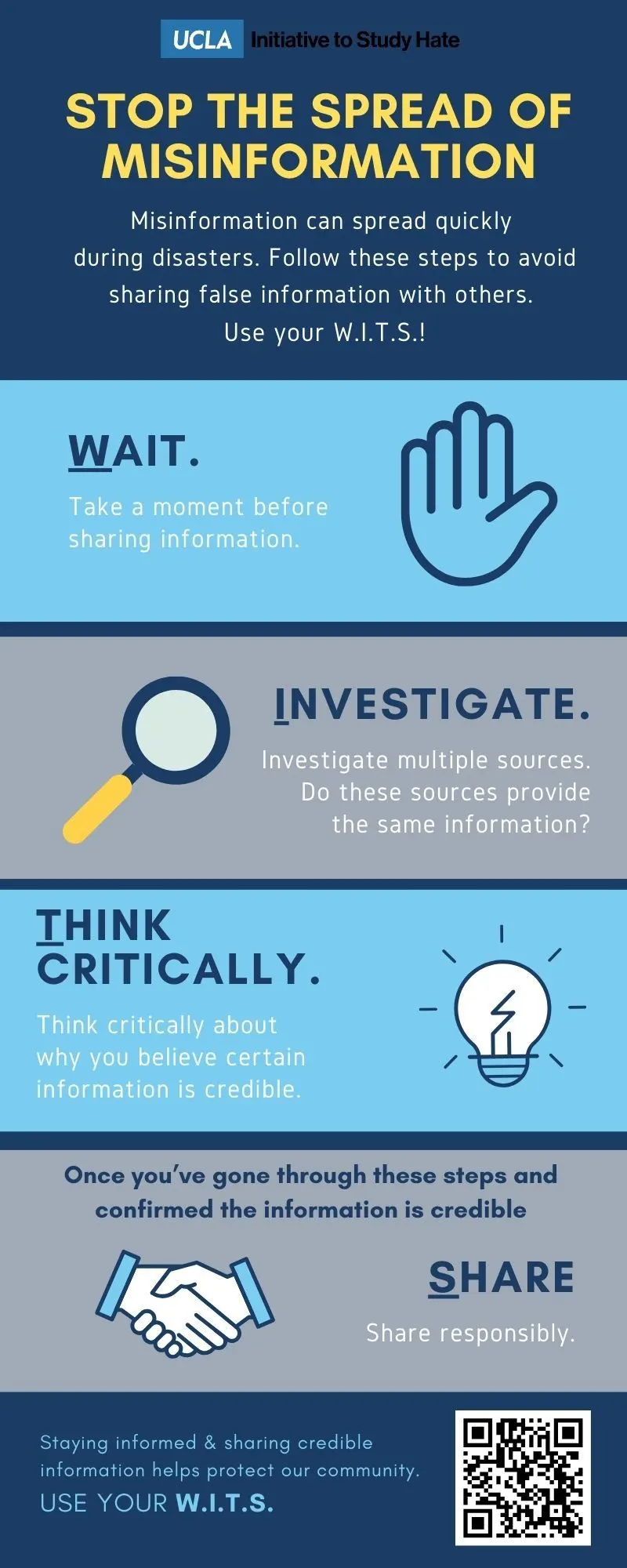
As polarization rises globally, interest in Cruz’s work has grown rapidly. Recent collaborators include:
- Local government departments seeking better approaches to anti-bias and anti-hate training
- Major technology firms, including teams working on AI safety and platform design
Many organizations are confronting a similar reality. Fact-checking and content moderation alone are not stemming misinformation online, and a new framework is needed.
Cruz’s work suggests that the key may be emotional and social rather than informational.
Not “Knowing More,” But “Hating Less”
Cruz believes we may need to rethink what success looks like.
“Getting every detail right is difficult, even for experts,” she noted. “The question shouldn’t always be, ‘Can we get everyone to know the correct answer?’ Instead, we should ask, ‘Can we help people be more open to others? Can we help reduce harmful polarization?”
If technology can help people hate each other less, even without perfect agreement, that may be one of the most impactful shifts we can make for democracy.
And, as Cruz emphasizes, the need could not be more urgent.
“This work is getting more relevant faster than any of us hoped. That’s not good news for society, but it means the research matters.”
What’s Next
The team is currently testing chatbot prototypes with real-world political messages and expects to begin wider user trials soon. A public demo is planned for later this year.
If successful, this approach could reshape how policymakers, educators, platforms, and communities approach, not just misinformation, but democratic discourse itself.
Related Links
Toolkit on misinformation & disinformation: UCLA Study of Hate
LA Wildfires misinformation: KQED
VoxDev: Political Polarisation