

Presidential Awards
2026 Award Recipients
Bridging Stories and Scholarship: Prototyping Participatory Impact Frameworks for Place-Based Narrative Infrastructure
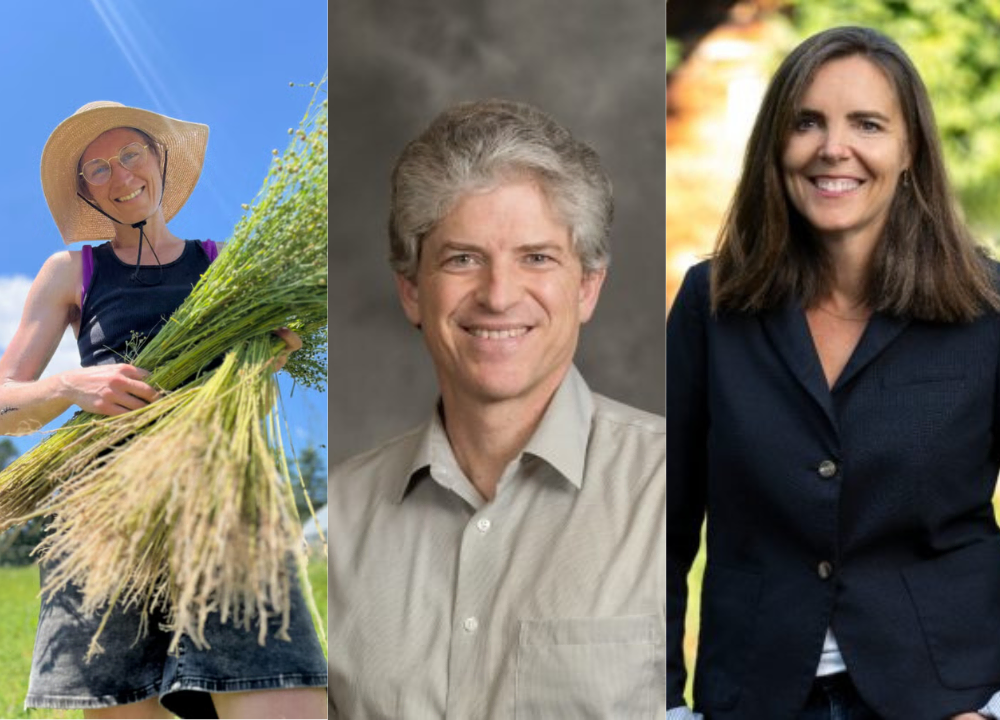
David Porter, Professor of English and Comparative Literature; Kristin Hass, Professor of American Culture; and Melissa Duhaime, Associate Professor of Ecology and Evolutionary Biology
This project will study how community storytelling can strengthen civic engagement and build trust, drawing on five years of work by U-M’s Detroit River Story Lab. The research will develop practical tools to measure the impact of projects that bring universities and communities together around local stories, history, and public scholarship. Ultimately, the goal is to help U-M and other universities better understand, improve, and expand this kind of community-based work
Abstract
The proposed research project will develop innovative and methodologically rigorous approaches to impact assessment for place-based narrative infrastructure collaborations in local communities. Building upon five years of ongoing work by U-M’s Detroit River Story Lab, our project will assess the efficacy of the Lab’s efforts at promoting civic engagement and draw on these findings to generate adaptable frameworks and toolkits for measuring and describing the significance of narrative-centered action-research projects in reinforcing foundational democratic values.
Drawing on both quantitative and qualitative methodologies, our research will pilot, refine, and disseminate assessment tools that reflect the promise and complexities of collaborative public humanities in our region and beyond. In this way, the project will directly address the translational challenges faced by research universities in documenting and scaling the societal impacts of their work in non-technical fields, especially with regard to the cultivation of the trust and civic engagement essential to democratic thriving.
Ultimately, the project aspires to deepen our capacity to account for the complex and evolving impacts that place-anchored storytelling and public scholarship can generate within communities. In doing so, it seeks not only to inform more meaningful, equitable, and reciprocal university-community partnerships, but also to facilitate the scaling and replication of the innovative models developed by the Detroit River Story Lab. By producing generalizable assessment frameworks and practical resources, the project aims to empower other institutions and community partners—both regionally and nationally—to adopt and adapt these approaches to their own place-based narrative infrastructure initiatives in support of civic well-being.
Bios
David Porter
Porter received the Ph.D. in Comparative Literature from Stanford University in 1996 and has been teaching at the University of Michigan since that time. He is the author of Ideographia: The Chinese Cipher in Early Modern Europe (2001) and The Chinese Taste in Eighteenth-Century England (2010). Additional publications include articles on cross-cultural aesthetics and comparative methodology. He is the recipient of major research awards from the National Endowment for the Humanities, the American Council for Learned Societies, the National Humanities Center, and the Institute for Advanced Study. Ongoing projects include a comparative study of the literary cultures of China and England in the 17th and 18th centuries. Teaching interests in Comparative Literature include undergraduate courses on comparative early modernities and graduate seminars on theories of world literature and comparative methodologies.
Kristin Hass
Hass is a Professor in the Department of American Culture at the University of Michigan. She lectures, teaches, and writes about nationalism, memory, publics, memorialization, militarization, race, visual culture, and material culture studies. She is also a long-time advocate for public, engaged, and non-traditional work in the humanities.
Melissa Duhaime
Dr. Melissa Duhaime is a microbial ecologist whose research integrates the study of environmental microbiomes and microplastics pollution with that of sustainable agriculture and textile systems. At the University of Michigan, she leads projects that integrate laboratory and field research, including campus flax cultivation as a model for regenerative natural fiber systems. Dr. Duhaime is recognized for her work studying both the environmental fate of microplastics and the microbes that degrade them, providing key insight into how these contaminants interact with environmental systems. Dr. Duhaime’s work demonstrates how understanding microbial ecology and environmental contaminants can drive innovation in sustainable agriculture and textiles.
The As-If Machine: Increasing Support for Democratic Institutions By Imagining Their Erosion
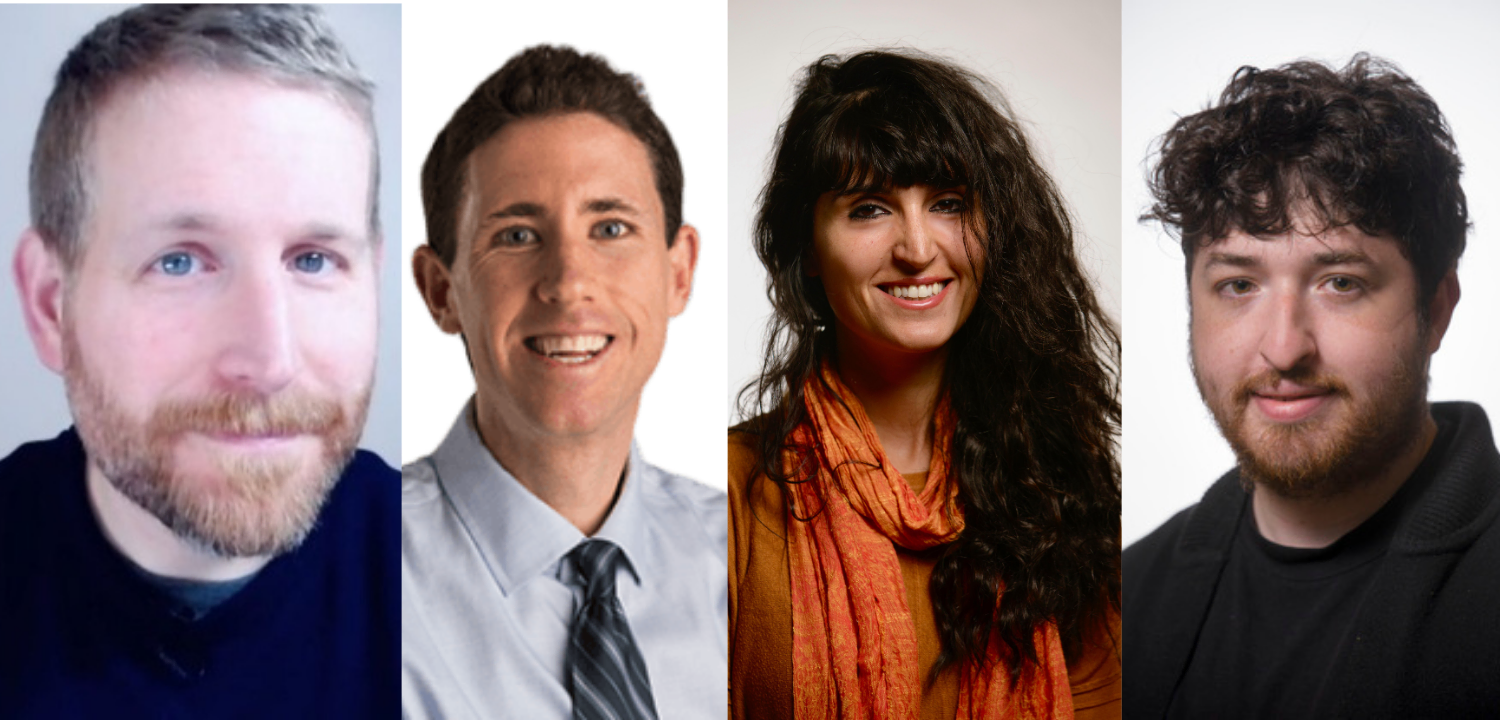
Eric Gilbert, Professor of Information, School of Information; Patrick Barry, Clinical Assistant Professor of Law; Ceren Budak, Associate Professor of Information and Joshua Ashkinaze, PhD candidate, School of Information
This project will explore whether imagining what life would be like without basic democratic rights can make people more aware of their importance. Using an AI tool that creates personalized stories about what happens when rights such as a jury trial are weakened or lost, the researchers will test whether these experiences increase support for democratic institutions. The goal is to determine whether this approach can help people recognize and resist threats to democracy before those institutions are actually at risk.
Abstract
Institutions often function like infrastructure—invisible until they break. Against democratic backsliding globally, core constitutional rights face an invisibility problem. They feel abstract until they disappear. This psychological distance creates vulnerability: Citizens may not recognize democratic erosion until it's too late. We posit that AI-generated
counterfactual narratives can strengthen support for democratic institutions by having participants imagine these institutions eroding. The As-If Machine (AIM) is a multi-agent system we developed that enables users to co-write personalized stories about their lives under counterfactual scenarios where constitutional rights have eroded. In a pilot RCT (n=81), participants who imagined losing jury trial rights showed substantially stronger policy support (d=0.54) and lower psychological distance (d=0.52) compared to reading
informational vignettes. M-Democracy funding will enable rigorous large-scale validation: six three-arm randomized controlled trials testing AIM against placebo and vignette controls, with two-week follow-ups. We will use a data-driven approach to select constitutional rights that are important yet psychologically overlooked. Our interdisciplinary team—human-computer interaction (Gilbert), political communication (Budak), and law (Barry) brings unique expertise to validate this approach. Expected outputs include large-scale experiments, publications in top-tier venues, public engagement events, and dissemination of findings to the general public and policy professionals. This work will create a scalable method for strengthening democratic resilience.
Bios
Eric Gilbert
Gilbert is a Professor in the School of Information at the University of Michigan. He also has a courtesy appointment in CSE. Before coming to Michigan, he was on the faculty at Georgia Tech. At Michigan, he runs the comp.social lab, and is affiliated with SCRL, CSMR, MISC, and ESC. Dr. Gilbert is a sociotechnologist, with a research focus on building and studying social computing systems. His work has been supported by grants from the SSRC, Rockefeller Foundation, Craig Newmark Philanthropies, Facebook, Samsung, Yahoo!, Google, Microsoft, ARL, DARPA, and NSF.
Patrick Barry
Barry is a clinical assistant professor of law and the director of artificial intelligence initiatives at the University of Michigan Law School as well as a visiting lecturer at the University of Chicago Law School and the UCLA School of Law. His research focuses on persuasion, creativity, team dynamics, and artificial intelligence.
Ceren Budak
Budak is an associate professor at the University of Michigan School of Information, with affiliations in the Department of Electrical Engineering and Computer Science and the Center for Political Studies. Previously, she was a postdoctoral researcher at Microsoft Research New York. He received his Ph.D. from the Computer Science Department at the University of California, Santa Barbara, in 2012 and his B.S. in Computer Science from Bilkent University in Turkey in 2007. Her research focuses on computational social science, using network science, machine learning and crowdsourcing methods to develop computational approaches to political communication.
Ashkinaze is a PhD candidate at the University of Michigan, School of Information—advised by Eric Gilbert and Ceren Budak. He is also a Cooperative AI fellow and broadly interested in human-AI interactions at the collective level, with a focus on alignment challenges that emerge at population scales. Concretely, this has two research directions—one about building new systems and one about evaluating current systems.
2025 Award Recipients
Observatory of Attitudes Toward Public-Serving Institutions (OATLI)

Sabina Tomkins, assistant professor, School of Information; and Ariel Hasell assistant professor of Communication and Media, LSA.
A project that will develop an open-source computational social science infrastructure for observing and understanding attitudes towards public-serving institutions and democratic systems on social media.
Abstract
In recent years, growing support for populism and anti-intellectualism have drawn increased scholarly attention to the role anti-establishment views play in undermining the health of democratic societies. Our proposal is to develop open-source computational social science infrastructure for observing and understanding attitudes towards public-serving institutions and democratic systems on social media. Additionally, we will conduct experiments to establish how incentives can influence the types of social media content that people choose to view given these anti-establishment views. Our work will lead to new understandings of not only how people feel about public-serving institutions today, but also lay the foundation for being able to assess these attitudes from observational data over time. Finally, our experimental work will provide new insights into the contexts in which mainstream news media is perceived to be providing accurate information.
Bios
Tomkins joined UMSI as assistant professor in Fall 2021. Her research applies computational methods to advance understanding in policy relevant domains. Her methods interests include responsible AI, survey design, and causal inference, and she currently works in the domains of computational sustainability, political science, and education policy.
Hasell is an Assistant Professor of Communication and Media at the University of Michigan. Broadly, her research focuses on digital media, public opinion, and public engagement with politics and science. She uses quantitative methodologies to examine how an individual’s choice of news media content influences various attitudes and behaviors, including information evaluation, motivations to process and share information, and the formation of policy preferences.
Her current research is focused on how social media are changing the nature of expertise and who is perceived to be an expert on topics related to science (e.g. sustainability and wellness) and politics (e.g. journalism and institutions).
Learning about Executive Power in a Democracy

Kenneth Lowande, associate professor of Political Science, LSA
A first-of-its-kind pilot study of public consumption of news about executive action in the United States. This pilot project, and the larger initiative it is part of, attempt to address the need for careful, rigorous social science on the impact of the routine use of executive power in a democracy.
Abstract
As you read this, President Trump is teaching Americans about their democracy. Almost daily, they hear about executive action, signed and delivered by the President. How is this barrage of news shaping American's perceptions of their democracy? How does it influence their trust in public institutions? We have few answers. This pilot project, and the larger initiative it is part of, attempt to address the need for careful, rigorous social science on the impact of the routine use of executive power in a democracy.
I will conduct a first-of-its-kind study of public consumption of news about executive action. Over a 10-week period, I will collect individual-level web traffic data from a pilot sample of 850 US adults, surveyed about their opinions on American democratic institutions. I pair this data with an ongoing effort to track and catalogue all presidential unilateral actions during the Trump administration. This will allow us to estimate the impact of executive actions on public perceptions of American democracy, and provide initial descriptive findings about how both factors relate to trust in democratic institutions.
This project will join ongoing projects of the Executive Policy Research Group (EPRG), which examine the impact of executive power in the United States. EPRG, which is made up of a faculty lead, postdoctoral researcher, graduate students, and undergraduate researchers, expects an initial round of foundation funding this Winter term. The pilot project we describe would be instrumental in our group making the case for longer-term financial support.
Bio
Lowande studies presidential power, Congress, and bureaucratic politics. He is an associate professor of political science and public policy at the University of Michigan. Previously, he held research fellowships at Washington University in St. Louis and Princeton University. His work has been discussed in the The Wall Street Journal, The Washington Post, NPR, USA Today, Fox News and ABC News. His new book, False Front: The Failed Promise of Presidential Power in a Polarized Age, has been called “a tour de force that will reorient scholarship on the American presidency.”
Democracy & Design

Anya Sirota, professor, A. Alfred Taubman College of Architecture and Urban Planning; and Sharon Haar professor, A. Alfred Taubman College of Architecture and Urban Planning; with Ishan Pal Singh, Director of the Taubman Visualization Lab, Lecturer in Architecture.
An exhibition, catalogue and public program that explores how the design of public spaces,from public squares to hybrid forums to experimental platforms, either invites participation or enforces exclusion.
Abstract
Democracy & Design examines the intersection of democratic practice and the systems—spatial, technical, and organizational—that sustain it. Conceived as an exhibition, catalogue and public program, the project reflects on the historical evolution of democratic structures while proposing new frameworks for governance that address the realities of a fractured, rapidly changing world.
Democracy, as this project understands it, is not an abstraction. It is a lived experience, shaped by the spaces where engagement, debate, and decision-making happen. From public squares to hybrid forums to experimental platforms, the project explores how the design of these spaces either invites participation or enforces exclusion. It is built on the premise that democracy’s survival depends on its capacity to adapt, expand, and embed itself our everyday lives.
At its core, the proposal seeks to foster what it calls the “democratic individual.” This effort becomes urgent in the face of emergent realities: declining voter turnout, eroding trust in institutions, the rise of populism, and the normalization of post-truth politics. By focusing attention on a curated series of both institutionally sanctioned and less visible practices of democracy, the project identifies ways to reimagine participation and create spaces where collective decision-making is reinvigorated. Democracy & Design does not offer easy answers. Instead it asks: How can democracy endure? What tools, spaces, and systems can make it accessible and resilient? Through historical reflection, speculative design, and public engagement, the project imagines an evolving democratic practice—one that must be intentionally designed if it is to remain relevant.
Bios
Sirota is an architectural designer, Associate Professor, Associate Dean of Academic Initiatives at Taubman College of Architecture and Urban Planning and founding principal of Akoaki. Her work, situated at the intersection of architecture and urban design, explores how a distinct synthesis of aesthetics, social enterprise, and cultural programming can offer contemporary and multi-disciplinary strategies for urban transformation. Her ongoing research and design efforts have received international recognition with recent projects featured at the Vitra Design Museum, the Brussels Design Museum, the Centro Pecci Prato, the Saint Etienne Design Biennale, and the Chicago Cultural Center. She is the recipient of the Architectural League Prize (2018), the ACSA Faculty Design Award (2016), the SXSW Eco Place by Design Award (2015), and the R+D Award from Architect Magazine (2013), and other honors. Sirota regularly contributes to international lectures, panels, workshops, and expositions addressing socially driven architectural practice and its impact on cities.
Sharon Haar
Sharon Haar, FAIA, NOMA, ACSA is Professor at Taubman College of Architecture and Urban Planning at the University of Michigan. Her current research investigates the development of equitable, affordable housing in the United States through Taubman College’s Collective for Equitable Housing (CEH), which she co-founded in 2021. The CEH brings together architecture, urban design, and urban planning faculty at Taubman College to promote housing equity within the state of Michigan and beyond. By leveraging faculty expertise, funding, and community-based partnerships, they pursue research questions and impact-driven projects. Continuing projects investigate the intersection of higher education and urban space, with a focus on the changing nature of the university campus, as well as the study of architectural practices devoted to social activism and humanitarian relief. Professor Haar’s books include: The City as Campus: Urbanism and Higher Education in Chicago and Schools for Cities: Urban Strategies. Her articles and book reviews appear in journals including the Journal of Architectural Education, the Journal of Planning Education and Research, the Journal of the Society of Architectural Historians, Architect’s Newspaper, and Architectural Design, among others.
Singh is a lecturer in architecture and the director of the Taubman Visualization Lab (TVLab) at the Taubman College of Architecture and Urban Planning. Singh’s work centers on digital visualization, hybrid spatiality, and the evolving role of media technologies in architectural education and practice. Through the TVLab, he has established new models of short-format pedagogy, integrating emerging tools like extended reality (XR), AI, and real-time rendering into courses across architecture, urban design, and urban planning. His workshops—both faculty-led and student-led—have included topics such as augmented reality, projection mapping, virtual production, and speculative visualization. He has also initiated the TVLab Research Grant, which supports faculty-led experimentation in architectural representation.
Understanding Democracy in the Age of Misinformation: A Social Network Approach

Cesi Cruz, associate professor of Political Science, LSA.
This case study of the Philippines integrates social network analysis, qualitative inquiry, and lab-in-the-field experiments to examine how misinformation circulates within social networks, why individuals engage with false narratives, and how interventions can be designed to promote critical engagement with information.
Abstract
The rise of digital technology and social media has transformed the way political information is accessed and disseminated in democracies, but it has also facilitated the rapid spread of misinformation, especially in politically polarized environments. Traditional interventions, such as fact-checking and content moderation, have yielded mixed results and, in some cases, led to backlash and reinforcement of pre-existing biases. This project addresses these challenges by investigating the social and political dynamics of misinformation in democratic societies, using the case of the Philippines, a highly polarized democracy with high social media
engagement.
This study integrates social network analysis, qualitative inquiry, and lab-in-the-field experiments to examine how misinformation circulates within social networks, why individuals engage with false narratives, and how interventions can be designed to promote critical engagement with information. The research will first map information flows and identify key influencers in misinformation transmission. Then, qualitative interviews and focus groups will explore the psychological and social mechanisms driving misinformation uptake. Finally, targeted community-based interventions, such as facilitated discussions and AI-driven chatbots, will be developed and tested to assess their effectiveness in improving information evaluation and reducing misinformation-sharing behaviors.
By shifting the focus from individual fact-checking to social identity and network-based interventions, this project aims to develop scalable approaches that foster greater trust in credible information sources, mitigate the effects of misinformation, and strengthen democratic resilience. The findings will offer insights into designing misinformation interventions that are both effective and resistant to backlash in politically polarized contexts.
Bio
Cruz is an Associate Professor in the Department of Political Science and the Department of Economics (by courtesy). She works on topics at the intersection of political science and economics, including elections, misinformation, gender and inclusive development. Her projects and working papers are available on her website: www.cesicruz.com.
'Imagining Freedom’: The Relationship Between Institutional Narratives, Political Imagination and Democratic Aspirations in U.S. Territories

Mara Ostfeld, research associate professor, Gerald R. Ford School of Public Policy; with Ignangeli Salinas-Muniz, Ph.D. Candidate, Political Science.
An examination of the role that institutional narratives play in perceived capacity for self-governance and democratic reform.
Abstract
More than four million Americans live in U.S. territories, yet their political status remains an anomaly within democratic theory. Despite longstanding dissatisfaction with territorial governance, efforts to achieve full democratic representation have stalled. This project investigates the role of institutional narratives in shaping political imagination—the perceived capacity for self governance and the belief that political change is possible—across U.S. territories. While many attribute the “decolonial deadlock” to territorial residents' uncertainty, we argue that dominant narratives, particularly those invoking fear, constrain political imagination and limit support for democratic reform.
Drawing on evidence from Puerto Rico, we analyze how institutional narratives of economic dependence, political instability, and cultural inferiority have shaped public attitudes toward self-governance. To expand this research, we will conduct archival analysis, focus groups, and a survey experiment in Guam and the U.S. Virgin Islands, examining how dominant and alternative narratives influence political imagination and attitudes toward democratization.
By illuminating the narrative structures that sustain the territorial system, this project contributes to broader discussions on democracy, federalism, and empire. Our findings will inform scholarly debates, policy discussions, and public discourse by providing empirical insights into how narrative framing impacts democratic aspirations. In addition to producing a book and academic publications, we will engage policymakers and territorial communities through policy briefs, conferences, and public discussions. Ultimately, this research seeks to expand the democratic political imagination and explore pathways toward a more inclusive and representative governance system for U.S. territories.
Bios
Dr. Ostfeld is an Associate Research Professor at the Ford School of Public Policy, a Faculty Associate at the Center for Political Studies, and the Research Director at the Center for Racial Justice at the University of Michigan. Her research sits at the intersection of political psychology and public opinion analysis, with a focus on the relationships between race, media, and political attitudes.
Dr. Ostfeld's work has been published in leading academic journals, including Social Forces, Political Behavior, Political Psychology, and Political Communication. Her research has also received support from prestigious institutions such as the National Science Foundation and the Russell Sage Foundation.
As the primary investigator of the Puerto Rico Public Opinion Lab (in collaboration with Mayra Vélez Serrano and Luis Cámara Fuertes at the University of Puerto Rico), Dr. Ostfeld leads the first representative study of political attitudes in Puerto Rico. In addition to her academic roles, she serves as a political analyst for NBC and Telemundo during national elections.
Muñiz is a Ph.D. candidate in Political Science at the University of Michigan and an NSF Graduate Research Fellow. She broadly studies multileve governance and subnational access to democracy through the lens of public and elite behavior. Her dissertation project, Governed Unequal, examines how ongoing power constraints in the United States territories shape representation and accountability. Her research has been supported by internal and external grants, and she has received the university’s Undergraduate Research Opportunity Program’s Outstanding Research Mentor Award. Her co-authored work has been published in Perspectives on Politics.