

Past Events Archive
Year of Democracy Featured Events
-
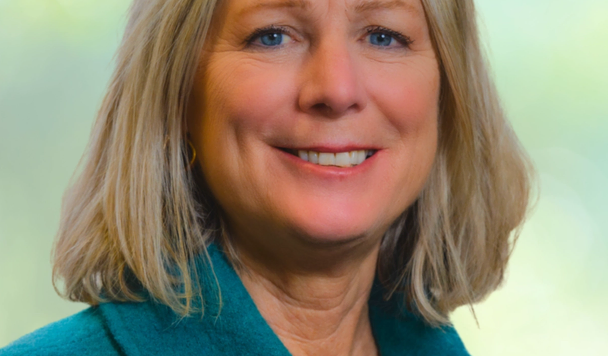
Conversations with an Elected Official - Washtenaw County Water Resources Commissioner
January 29, 2026 | 12:00-1:00PM | Ginsberg Center Commons
Come and join us for another iteration of Conversations with an Elected Official - Water Resources Commissioner where we will be talking about what this elected office does, how the official got into local politics, and answer questions direct from constituents like you!
More about this event
Hosted in the Ginsberg Center Commons on January 29th from 12pm-1pm. We will be talking with Washtenaw County Water Resources Commissioner Gretchen Driskell.
Be on the lookout for additional events throughout the year featuring other local elected officials! -

Unpacking the News with Professor Pasek
January 28, 2026 | 4:00-5:00PM | Michigan League, Room 4
Join a weekly, student-centered conversation that takes a closer look at major news events shaping the world.
More about this event
Each session offers a space to pause, sort out what’s happening, and engage in thoughtful, civil discussion with peers. Bring your questions, your curiosity, and your perspective—no preparation required.
Josh Pasek is Professor of Communication & Media and Political Science, Faculty Associate at the Center for Political Studies, Institute for Social Research, and Associate Director of the Michigan Institute for Data Science at the University of Michigan -

The Invention of Rum in a Era of Revolution
January 22, 2026 | 4:00-5:30PM | Hatcher Graduate Library
This talk, building on Jordan’s 2025 book The Invention of Rum: Creating the Quintessential Atlantic Commodity, will present a new story of how rum was invented, made, sold, and consumed in the Atlantic world, and how those developments intersected with the American Revolution.
More about this event
He will introduce the audience to a commodity that itself revolutionized the Atlantic world in large part due to its ubiquity and affordability. He will then home in on various moments in the lead-up, course, and aftermath of the American Revolution when the market for—and meanings embedded within—rum shaped the age of revolutions.
-
Unpacking the News with Professor Pasek
January 21, 2026 | 4:00-5:00PM | Michigan Union, Pond Room
Join a weekly, student-centered conversation that takes a closer look at major news events shaping the world.
More about this event
Each session offers a space to pause, sort out what’s happening, and engage in thoughtful, civil discussion with peers. Bring your questions, your curiosity, and your perspective—no preparation required.
Josh Pasek is Professor of Communication & Media and Political Science, Faculty Associate at the Center for Political Studies, Institute for Social Research, and Associate Director of the Michigan Institute for Data Science at the University of Michigan -
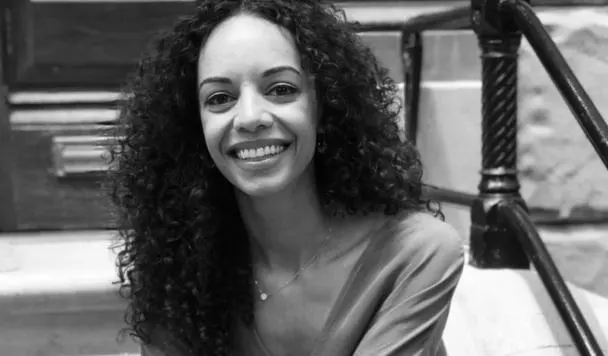
DEPORTATION NATION: Chronicling Our Current Chapter in America's Long History of Exclusion
January 20, 2026 | 4:30-6:00PM | Rackham Graduate School Amphitheatre, 4th floor
The Trump administration’s deportation campaign is having a major impact on American institutions, from local governments and businesses to churches and schools, and has helped to cement immigration enforcement as one of the key civil rights issues of our time.
More about this event
But the system through which these mass deportations are being carried out has been in place for decades, and many of the issues drawing headlines — from overcrowded detention centers, to family separations, and deportations without due process — are nothing new. In this conversation, Dickerson will debunk common misconceptions about how the American immigration system works and how it doesn’t. She will also discuss the United States’ complex history with immigrants, which includes a deeply ingrained, race-based fear that, for centuries, has been directed toward virtually every group of American immigrants, fuelling moments of intense backlash like the one we are in now.
About the speaker:
Caitlin Dickerson has been a staff writer at The Atlantic since 2021. In 2023, she won the Pulitzer Prize for Explanatory Reporting and the Livingston Award for National Reporting for “We Need to Take Away Children,” an indepth examination of the U.S. government’s child separation policy during the first Trump adminstation. Before joining The Atlantic, Dickerson spent five years as a reporter for The New York Times, and five years as a producer and reporter for NPR. Her investigative reporting and long-form feature writing have also been recognized with a Peabody, an Edward R. Murrow award, and two National Association of Black Journalists Salute to Excellence awards.
About the moderator:
Lynette Clemetson is the Charles R. Eisendrath Director of Wallace House Center for Journalists, home of the Knight-Wallace Fellowships for Journalists and the Livingston Awards for Young Journalists at the University of Michigan.
Reception following discussion. -

Lessons of Authoritarianism and Democratic Resilience in Latin America: Free Community Film Screening & Discussion I'm Still Here
January 20, 2026 | 5:30-8:30PM | State Theatre 1, 233 S State St
BRAZIL, 1971 - Brazil faces the tightening grip of a military dictatorship. Eunice Paiva, a mother of five children is forced to reinvent herself after her family suffers a violent and arbitrary act by the government.
More about this event
The film is based on Marcelo Rubens Paiva's biographical book and tells the true story that helped reconstruct an important part of Brazil’s hidden history. Join us for a free film screening and discussion with Dr. Victoria Langland and PhD Candidate, Ana Guimarães.
No tickets necessary, but please sign the registration form: https://forms.gle/5xDYx6WBAhaE4mDR8
Co-sponsors:
Department of History, Donia Human Rights Center, Center for Emerging Democracies
Accommodation: If there is anything we can do to make this event accessible to you, please contact us. Please be aware that advance notice is necessary as some accommodations may require more time for the university to arrange.
Email: -- [email protected] -
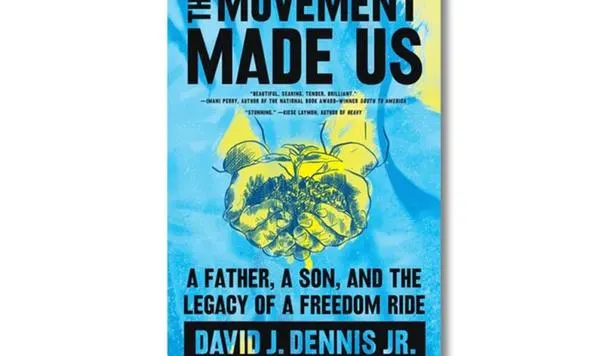
The Movement Made Us All: Historical Legacies of the Civil Rights Movement and the Current Moment
January 19, 2026 | 6:00-7:30pm | Museum of Art - Helmut Stern Auditorium
David Dennis, Jr., (author, journalist, senior writer at Andscape and ESPN commentator) David Dennis, Sr., UM Law ’71 (founder and director of the Southern Initiative Algebra Project, CORE Southern Regional Director, 1962-65)
More about this event
As part of the University of Michigan's MLK Symposium, please join us for a conversation with journalist and sports commentator David Dennis Jr. and his father, civil rights movement veteran David Dennis Sr. Authors of "The Movement Made Us: A Father, A Son and the Legacy of a Freedom Ride," a moving memoir of the Civil Rights Movement of the 1960s, Dennis Jr. and Sr. will discuss the political and personal legacies of the movement and its historical relevance for the challenges facing American society in the present. Matthew Countryman, associate professor of Afroamerican Studies and History, will serve as moderator for the event.
There will be a reception at 4:00 pm in the Pendleton Room of the Michigan Union before the event where guests will have the opportunity to purchase copies of "The Movement Made Us" signed by the authors.
Presented by the Department of Afroamerican and African Studies, the Department of History, the Eisenberg Institute for Historical Studies, the Michigan Program for Advancing Cultural Transformation (M-PACT) in Biomedical and Health Sciences and the Scholars Network on Masculinity and the Well-Being of African American Men in the Center for Social Solutions. Additional support from the Kalt Fund for African American and African History. -
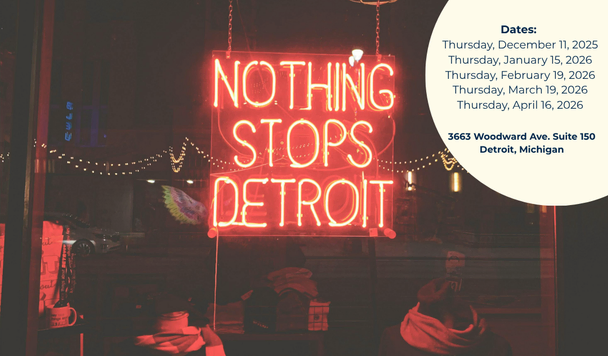
Workshop of Democracy: Community Benefits, Community Land Trusts, and Equitable Economic Development
January 15, 2026 | 10-12PM | 3663 Woodward Ave, Suite 150, Detroit MI
Hear case studies from Detroit neighborhoods on how these models can work elsewhere. We’ll look at Community Benefits Agreements and Community Land Trusts as ways to keep housing affordable and reduce inequality.
Workshop of Democracy: Join us for a dynamic series of panels and workshops showcasing how Detroiters have responded to 21st century challenges, developed innovative strategies and driven policy change—offering inspiring examples of grassroots power in action.More about this event
Too often Detroit has been viewed as a site of social and economic problems, and not as a source of solutions or strategies for the future. With partners at Bridge Detroit, the University of Michigan Detroit Center is hosting a series of public panel discussions exploring the struggles and achievements of local grassroots movements who have confronted the challenges of the 21st century–from food deserts and environmental racism to gentrification and violence–with the grit and spirit of innovation that defines the spirit of the Motor City. Come join the conversation, and learn the lessons that Detroit has to teach the nation and the world
-
Unpacking the News with Professor Pasek
January 14, 2026 | 4:00-5:00PM | Michigan Union, Pond Room
Join a weekly, student-centered conversation that takes a closer look at major news events shaping the world.
More about this event
Each session offers a space to pause, sort out what’s happening, and engage in thoughtful, civil discussion with peers. Bring your questions, your curiosity, and your perspective—no preparation required.
Josh Pasek is Professor of Communication & Media and Political Science, Faculty Associate at the Center for Political Studies, Institute for Social Research, and Associate Director of the Michigan Institute for Data Science at the University of Michigan -
Workshop of Democracy: Urban Agriculture and Food Sovereignty
December 11, 2025 | 10-12PM | 3663 Woodward Ave, Suite 150, Detroit MI
Hear Detroit’s urban agriculture leaders discuss sustainable practices, food security, and current battles over policy and land.
Workshop of Democracy: Join us for a dynamic series of panels and workshops showcasing how Detroiters have responded to 21st century challenges, developed innovative strategies and driven policy change—offering inspiring examples of grassroots power in action.More about this event
Too often Detroit has been viewed as a site of social and economic problems, and not as a source of solutions or strategies for the future. With partners at Bridge Detroit, the University of Michigan Detroit Center is hosting a series of public panel discussions exploring the struggles and achievements of local grassroots movements who have confronted the challenges of the 21st century–from food deserts and environmental racism to gentrification and violence–with the grit and spirit of innovation that defines the spirit of the Motor City. Come join the conversation, and learn the lessons that Detroit has to teach the nation and the world