

Past Events Archive
Year of Democracy Featured Events
-
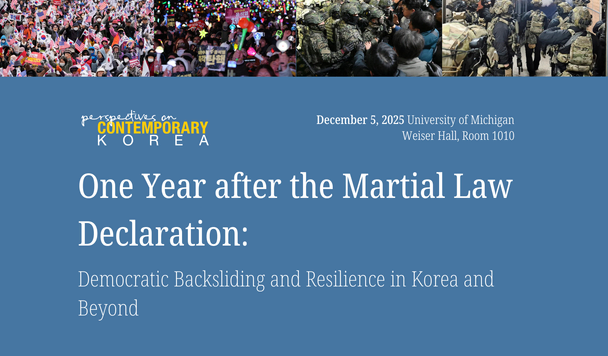
One Year After The Martial Law Declaration: Democratic Backsliding and Resilience in Korea and Beyond
December 5, 2025 | 9:30AM-5:10PM | Weiser Hall, Room 1010
More about this event
This conference marks the first anniversary of the unprecedented political upheaval triggered by President Yoon Seok Yeol’s declaration of martial law in South Korea. The event aims to critically reflect on the political and institutional causes and consequences of this crisis, both within Korea and in a broader comparative perspective. In the wake of this extraordinary challenge to democratic norms around the world, what have we learned about the vulnerabilities and the strength of democratic institutions from the experience of South Korea?
By situating Korea within the global wave of democratic backsliding and bringing together scholars working on democratic backsliding from diverse cases and perspectives, this workshop aims to generate new insights into institutional guardrails, civic mobilization, elite behavior, and international influence. It will also examine how Korea’s political trajectory over the past year informs debates about the durability of democracy in both established and emerging democratic regimes.
-
Political Speech and the Public Square: Free Speech: Should There be Limits?
December 2, 2025 | 12:00-1:00PM | The Diag
The University of Michigan is an institution with diverse communities, interests and opinions. In Fall 2024, the Faculty Senate Office launched the series – Political Speech and the Public Square – to provide a forum for members of the U-M community to present informed, fact-based perspectives, and to listen to and learn from each other.
-
Political Speed and the Public Square: Surveillance: Does It Make Us Safer?
November 18, 2025 | 12:00-1:00PM | The Diag
The University of Michigan is an institution with diverse communities, interests and opinions. In Fall 2024, the Faculty Senate Office launched the series – Political Speech and the Public Square – to provide a forum for members of the U-M community to present informed, fact-based perspectives, and to listen to and learn from each other.
-
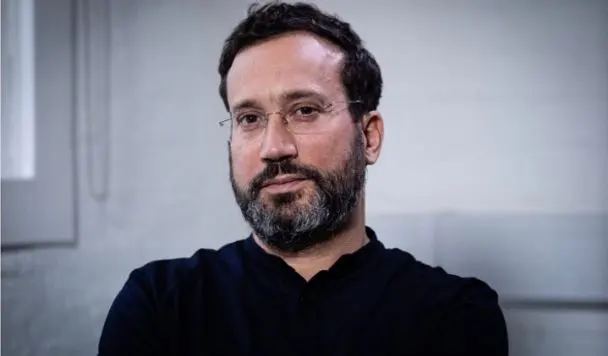
Charles Correa International Lecture: Eyal Weizman
November 18, 2025 | 7:00-8:30PM | Walgreen Drama Center, STAMPS Auditorium, 1226 Murfin Ave
Eyal Weizman is the founder and director of Forensic Architecture and professor of Spatial and Visual Cultures at Goldsmiths, University of London, where in 2005 he founded the Centre for Research Architecture.
More about this event
He is the author of many books, including Hollow Land, The Least of all Possible Evils, Investigative Aesthetics, The Roundabout Revolutions, The Conflict Shoreline and Forensic Architecture. Eyal held positions in many universities worldwide including Princeton, ETH Zurich and the Academy of Fine Arts in Vienna.
-
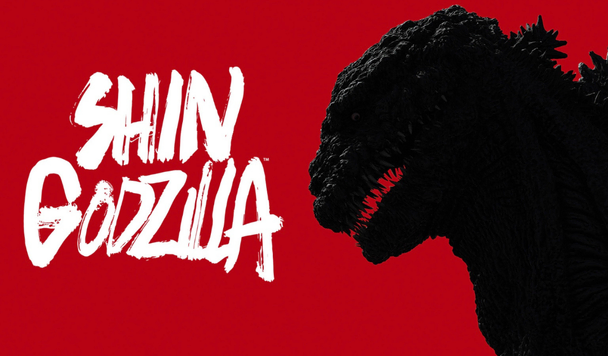
Democracy on Screen: Shin Godzilla
November 13, 2025 | 6:00-8:00PM | Annenberg Auditorium, Weill Hall (Room 1120)
Shin Godzilla is a 2016 Japanese action film that reimagines the classic monster as an endlessly evolving, disaster-causing force.
More about this event
Join us for the launch of Democracy on Screen — a film series presented as part of the Ford School's Resilient Democracies initiative. This series celebrates the role of storytelling and creative expression in shaping, challenging, and expanding our understanding of democracy and civic empowerment. Through powerful films, we’ll explore how everyday people and grassroots movements drive change, amplify marginalized voices, and reimagine what democracy can be.
Shin Godzilla is a 2016 Japanese action film that reimagines the classic monster as an endlessly evolving, disaster-causing force. Unlike many Godzilla films that focus on the monster-versus-monster spectacle, this entry is a chilling political satire, with the central conflict revolving around the Japanese government's bureaucratic, slow, and inadequate response to the crisis. The narrative unfolds with a palpable sense of escalating dread, emphasizing how political indecision and red tape can compound a disaster, making the human element a reflection of real-world anxieties rather than just a dramatic subplot.
-
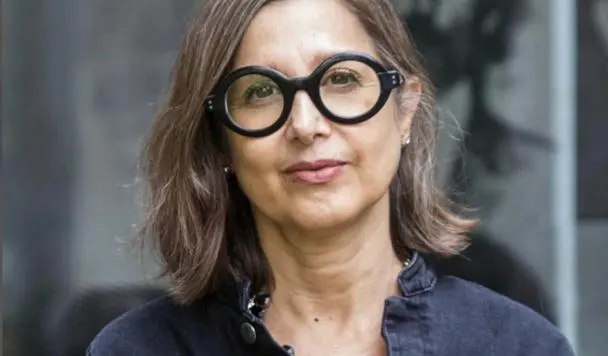
Lessons of Authoritarianism and Democratic Resilience in Latin America: "Memoria" as Resistance: Comparative Human Rights Education in Chile and Argentina
November 7, 2025 | 4:00-5:30PM | Weiser Hall, Room 555
During the Cold War, human rights organizations in Latin America have calculated there were close to 100,000 missing persons due to state-led violence, including the kidnapping of children.
More about this event
In Argentina alone, 30,000 persons were forcibly disappeared, and 500 children were taken from women in detention and placed with families favorable to the military regime. During this time, Chilean Dictator, Augusto Pinochet, launched Operation Condor, a secret, multi-lateral counter-intelligence program that came to include military governments in Uruguay, Paraguay, Argentina, Bolivia, Brazil, Peru, and Ecuador. Their collaborations led to hundreds of international kidnappings, torture, and assassinations of civilians, human rights activists and political refugees within the region, U.S., and Europe. Yet, through a combination of domestic resistance and mobilization by activists and international pressure, countries like Chile and Argentina transitioned to not only thriving democracies, but global leaders in human rights education.
Join us to learn from Chilean activist and Manager of Archives at the Museum of Memory and Human Rights in Chile, Juan Carlos Vega Briones and the former Executive Director of the ESMA Museum and Site of Memory of Argentina, Mayki Gorosito.
Event presentations are in Spanish with English translation.
Co-sponsors:
Donia Human Rights Center, Center for Emerging Democracies, University of Michigan Global Engagement, Office of the Provost.
Accommodation: If there is anything we can do to make this event accessible to you, please contact us. Please be aware that advance notice is necessary as some accommodations may require more time for the university to arrange.
Email: -- [email protected] -
-
Voting
Washtenaw County Special Election
November 4, 2025 | 7:00AM-8:00PM
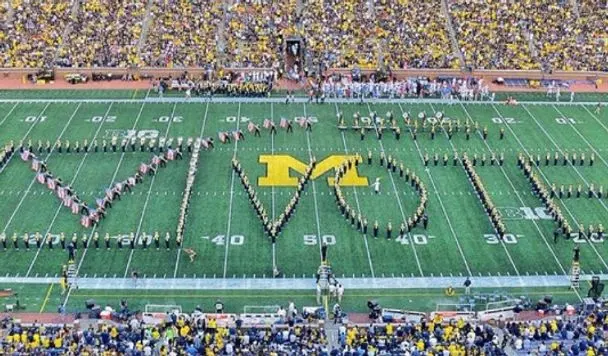
For Michigan voters, information about voter registration, to check if you’re registered, early voting locations, and election day voting can be found at the Secretary of State Voter Information webpage.
-
-
Vladimir Kara-Murza | 2025 Wallenberg Medal and Lecture | Free people in an Unfree Country
November 4, 2025 | 4:30-6:00PM | Rackham Auditorium
Vladimir Kara-Murza, Russian politician, author, historian, and former political prisoner, will receive the 2025 Wallenberg Medal from the University of Michigan on November 4th at 4:30PM in Rackham Auditorium.
More about this event
Vladimir Kara-Murza, Russian politician, author, historian, and former political prisoner, will receive the 2025 Wallenberg Medal from the University of Michigan on November 4th at 4:30PM in Rackham Auditorium. A close colleague of the slain opposition leader Boris Nemtsov, he served as deputy leader of the People’s Freedom Party and was a candidate for the Russian Parliament. Leading diplomatic efforts on behalf of the opposition, Kara-Murza played a key role in the adoption of Magnitsky sanctions against top Russian officials by the United States, United Kingdom, European Union, Canada, and Australia. Magnitsky sanctions are governmental sanctions against foreign individuals who have committed human rights abuses or been involved in significant corruption. For this work he was twice poisoned and left in a coma; a joint media investigation by Bellingcat, The Insider, and Der Spiegel has determined that officers of the Russian Federal Security Services (FSB) were behind the attacks.
In April 2022, Kara-Murza was arrested in Moscow for publicly denouncing the invasion of Ukraine and war crimes committed by Russian forces. Following a closed-door trial at the Moscow City Court, he was sentenced to 25 years for “high treason” and kept in solitary confinement at a maximum-security prison in Siberia. He was released in August 2024 as part of the largest East-West prisoner exchange since the Cold War negotiated by the U.S. and German governments.
Kara-Murza is a contributing writer at the Washington Post, winning the 2024 Pulitzer Prize for his columns written from prison, and has previously worked for Echo of Moscow, BBC, RTVi, Kommersant, World Affairs, and other media organizations. He has directed three documentary films and is the author or contributor to several books on Russian history and politics.
Kara-Murza serves as vice-president at the Free Russia Foundation, as senior advisor at Human Rights First, and as senior fellow at the Raoul Wallenberg Centre for Human Rights in Montreal. He was the founding chairman of the Boris Nemtsov Foundation for Freedom and has led successful international efforts to commemorate Nemtsov, including with street designations in Washington, D.C. and London. Kara-Murza is a recipient of several awards, including the Council of Europe’s Václav Havel Human Rights Prize, and is an honorary fellow at Trinity Hall, Cambridge. He holds an M.A. (Cantab.) in History from Cambridge. He is married, with three children.
“Like Raoul Wallenberg, Vladimir Kara-Murza has dedicated his life to defending democracy and human rights, exhibiting extraordinary courage and vision,” said Sioban Harlow, chair of the Wallenberg Medal Executive Committee and Professor Emerita of Epidemiology, Obstetrics and Gynecology, and Global Public Health. -
Malala Yousafzai in Conversation, "Finding My Way"
October 24, 2025 | 4:30-6:00PM | Rogel Ballroom
-
Lessons of Authoritarianism and Democratic Resilience in Latin America: Cuba's Digital Revolution: Between Quiescence and Revolt
October 24, 2025 | 4:00-5:30PM | Weiser Hall, Room 555
A new digital revolution is underway in Cuba. Despite the continued repression of freedoms of speech and assembly, a new generation of Cubans have used digital technologies and social media to fundamentally transform how citizens debate, inform and challenge the authoritarian status quo on the island.
More about this event
From animal rights activists to domestic violence awareness campaigns, to the thousands that took to the streets in cities throughout the island in July 2021, these activities have been organized and documented primarily through new independent digital means. Many young people, intellectuals and artists have developed a whole sector of unique digital spaces for national debate and dialogue to advocate for a more inclusive Cuba. Join us for a dialogue with Dr. Michaelanne Thomas (UMSI) and Harold Cárdenas Lema, co-founder and former director of one of the foremost digital spaces for Cubans by Cubans on the island, La Joven Cuba.
Accommodation: If there is anything we can do to make this event accessible to you, please contact us. Please be aware that advance notice is necessary, as some accommodations may require more time for the university to arrange.
Email: -- [email protected]